My Dog Won't Sit Still and Can't Be Off Leash. Can You Still Photograph Them?
My dog won't sit still and can't be off leash. Can you still photograph them?
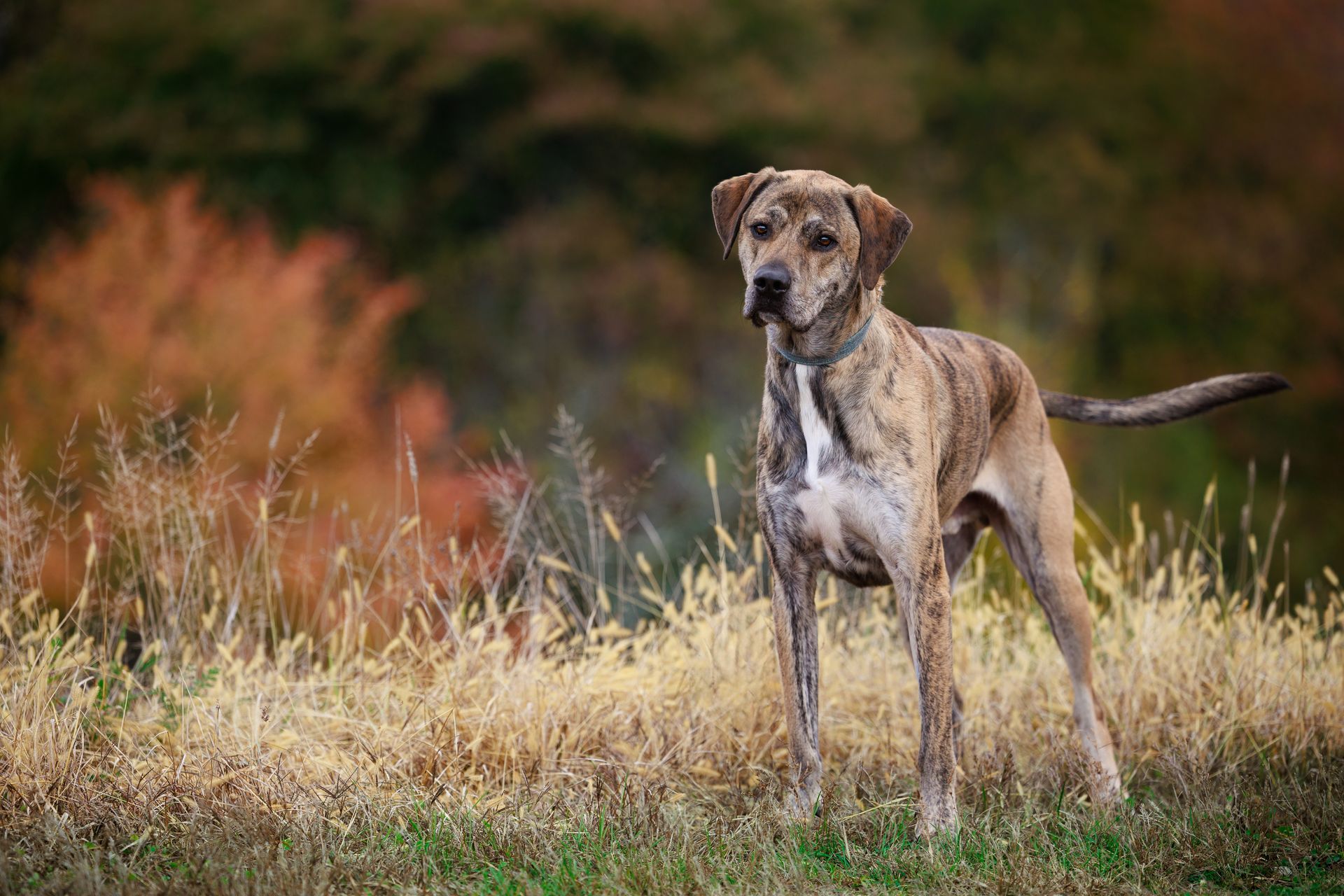
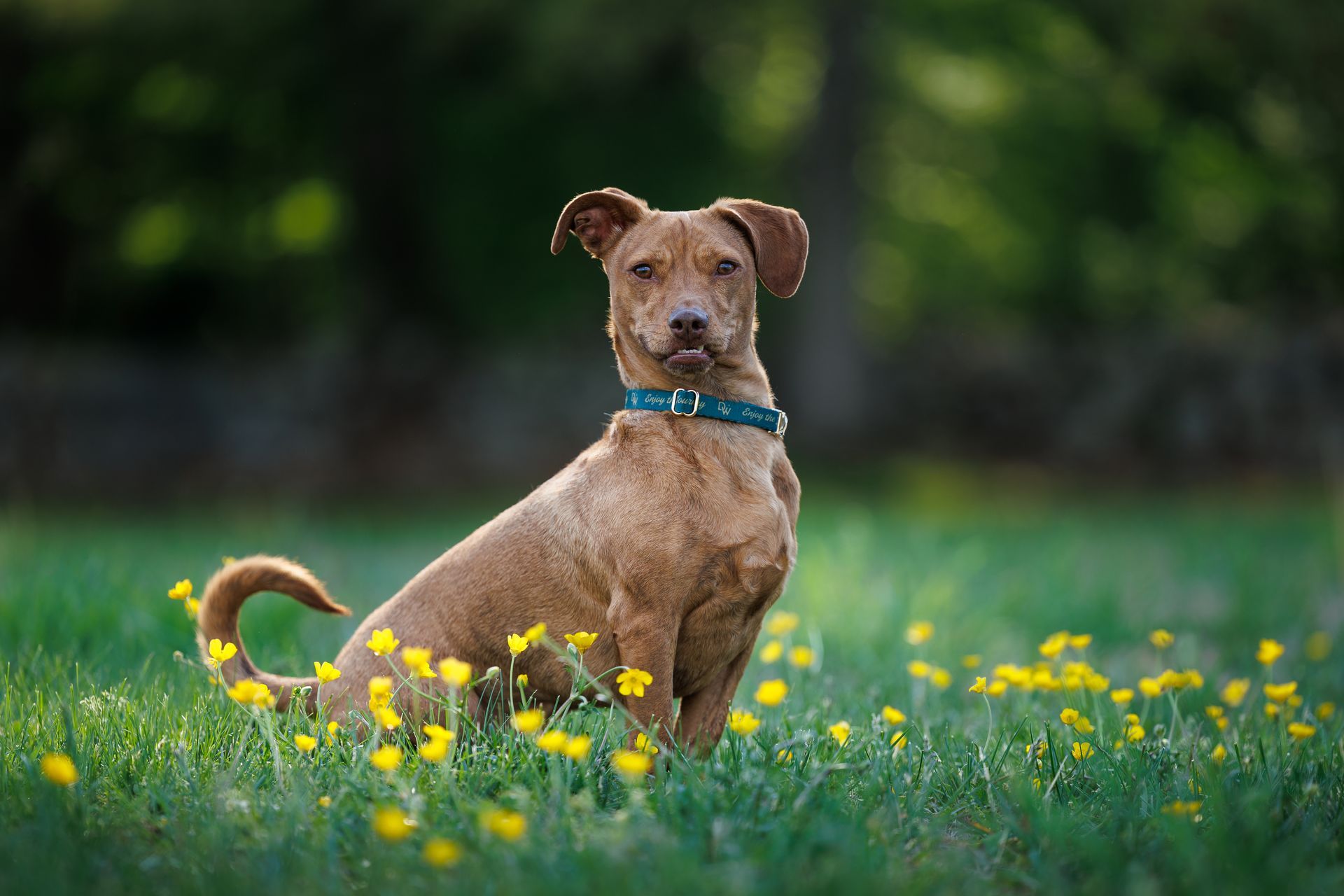
You look through a dog photographer's portfolio.
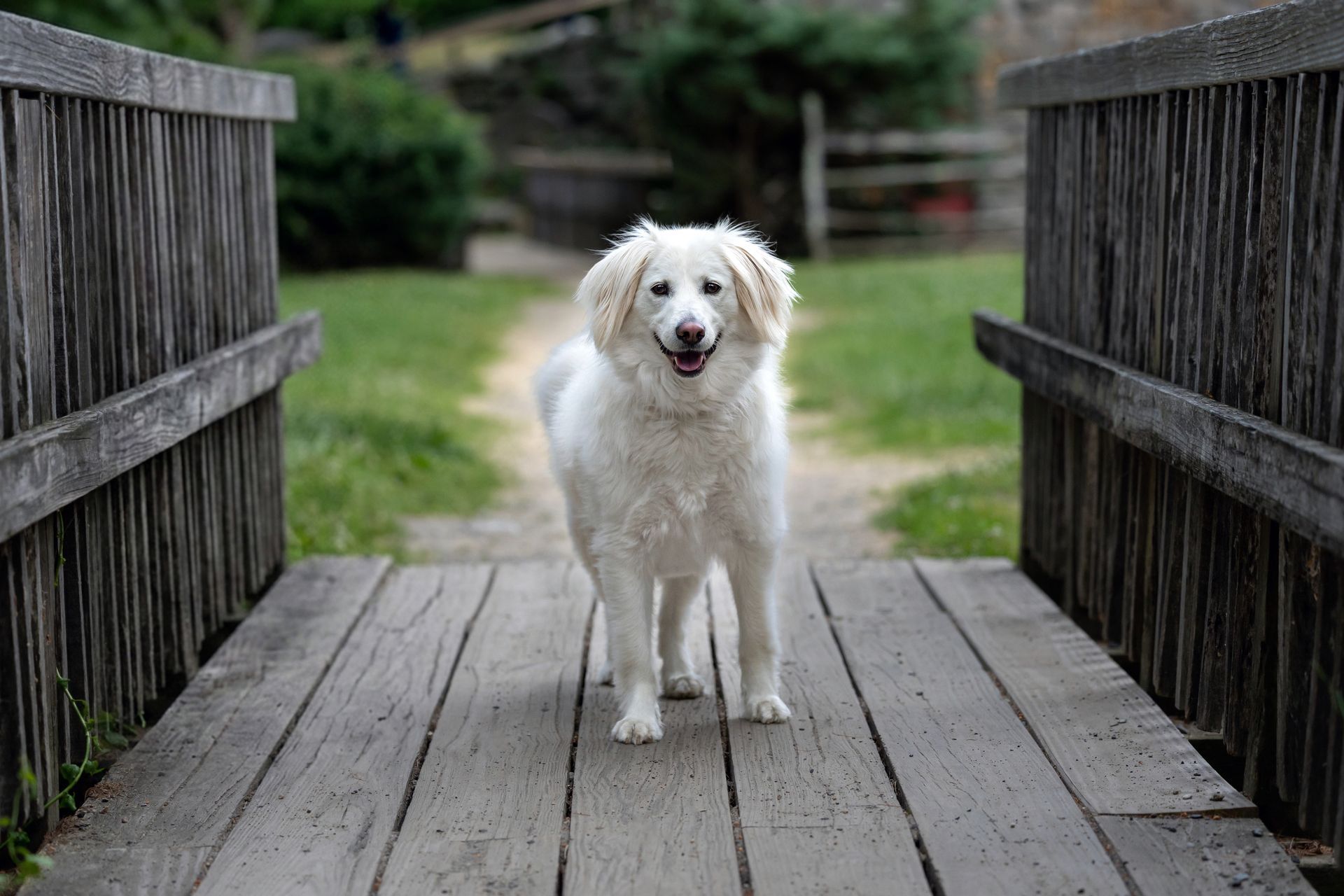
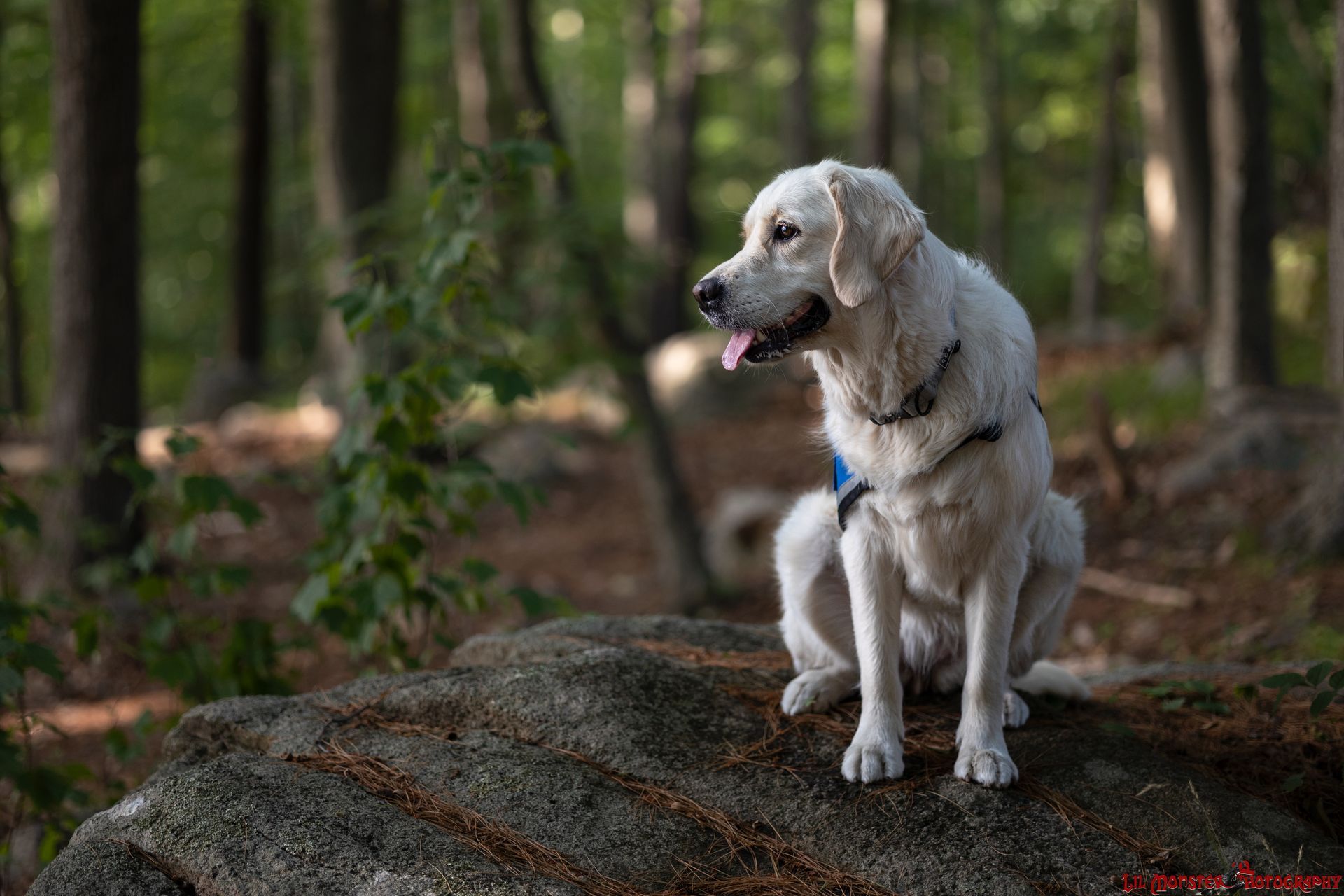
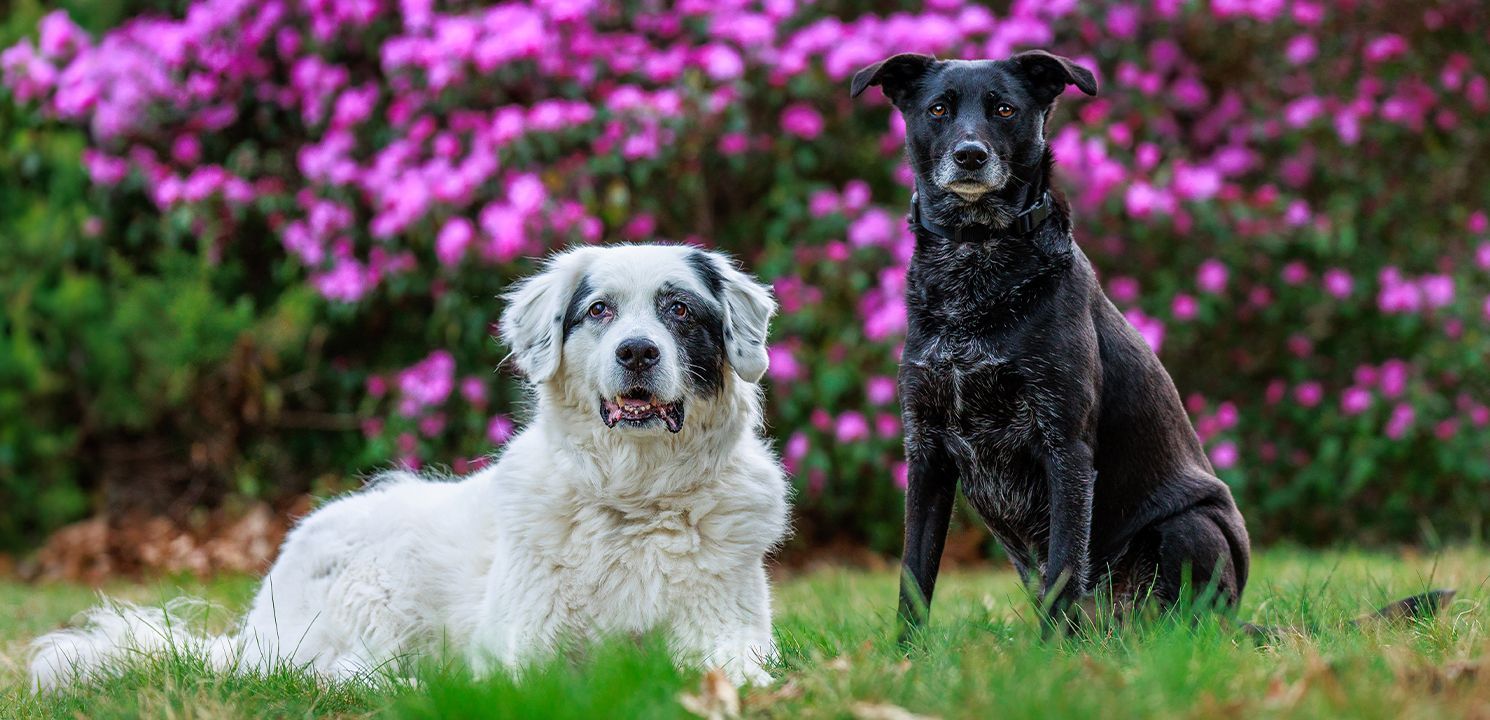
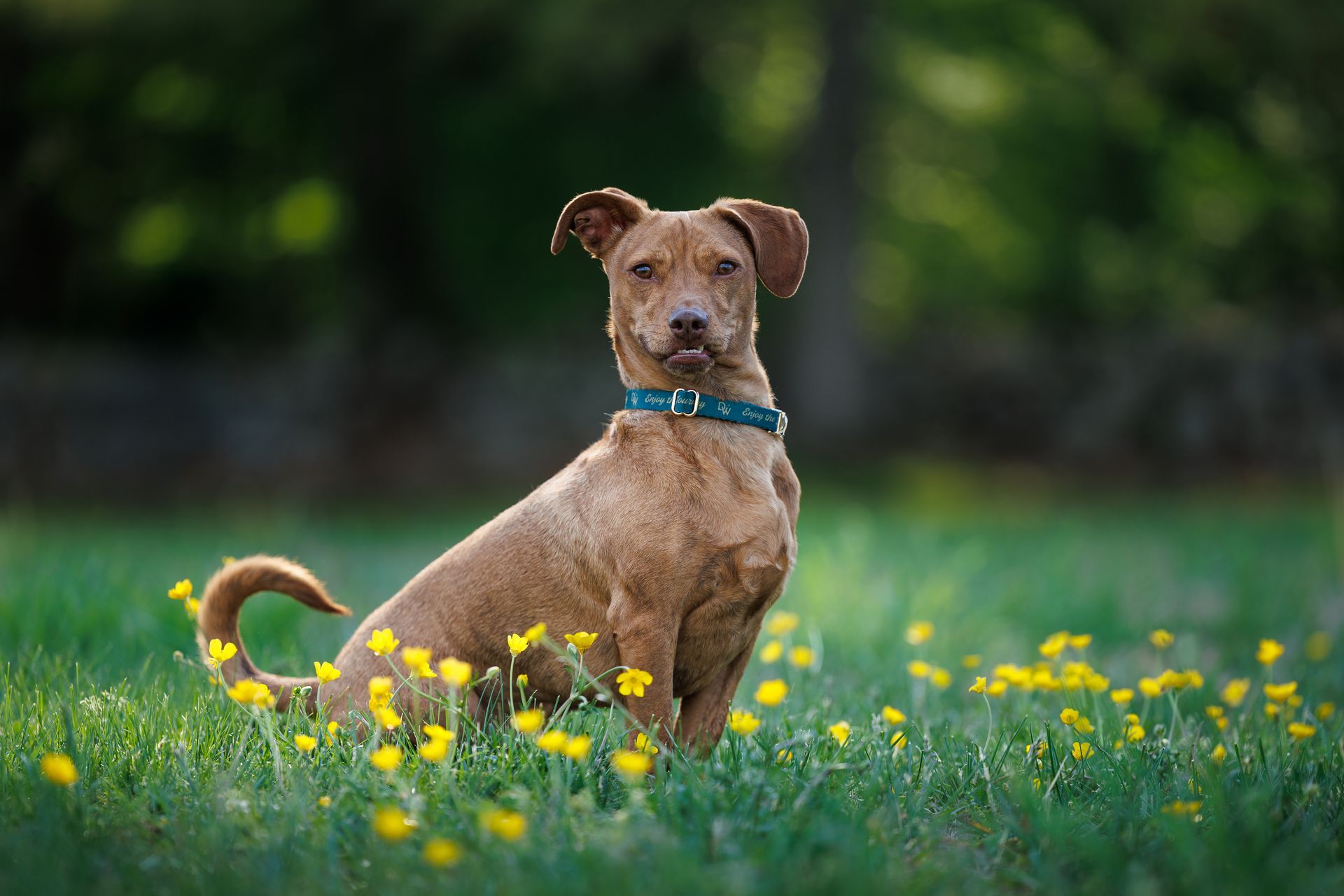
There's a dog sitting perfectly in the middle of a field.
Another standing alone on a trail.
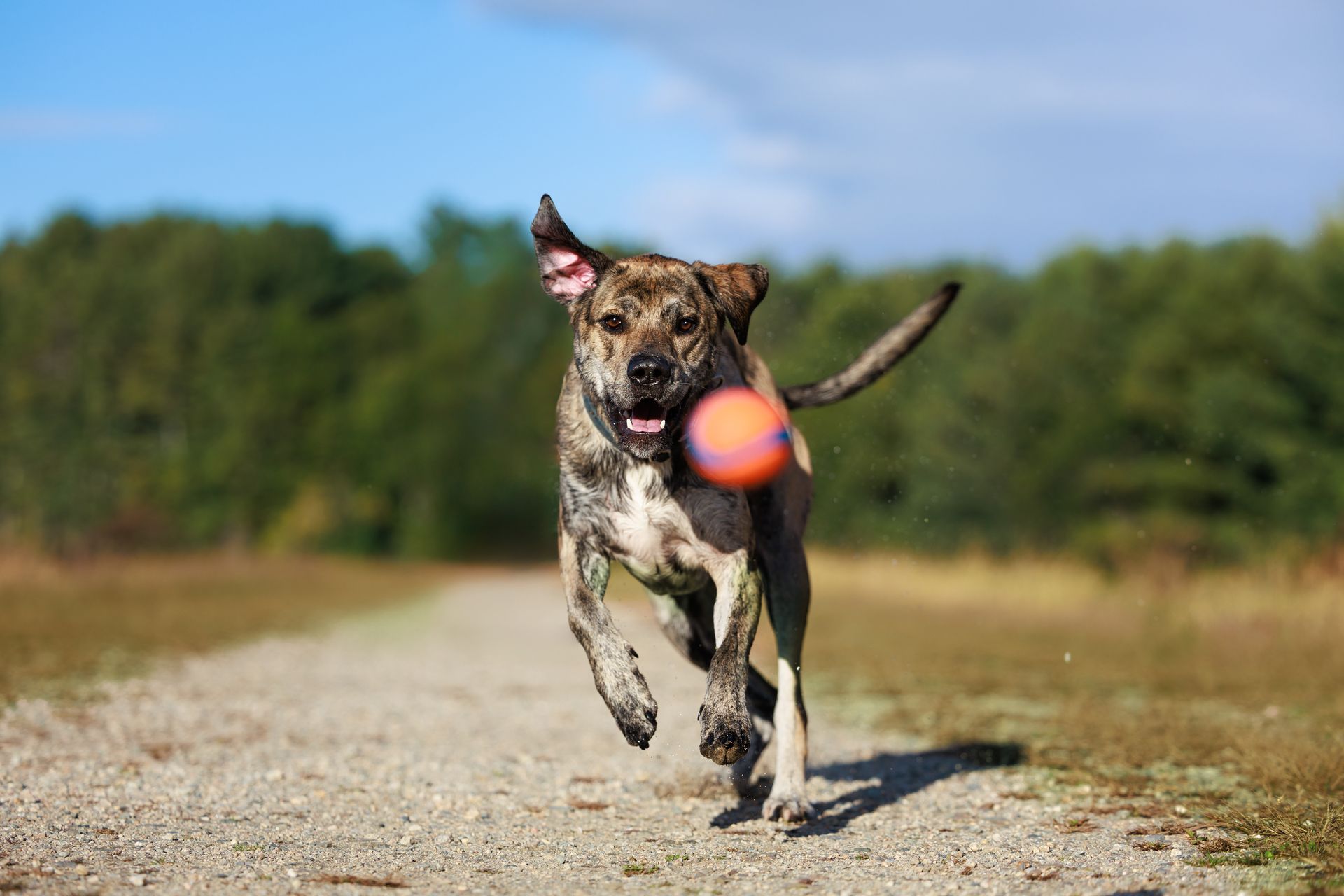
One running toward the camera with nobody anywhere nearby.
And you immediately think:
“Yeah... my dog could NEVER do that.”
Here's something you might not realize.
The dog you're looking at might not have been off leash.
They might have sat still for less than a second.
There might have been someone standing five feet away holding a long line.
And five seconds after I took that photograph, the dog may have been sniffing the ground, looking for squirrels or attempting to walk directly into my camera.
You see the finished photograph.
I see everything that happened before and after it.
Your dog doesn't need to be perfectly still or safely off leash for us to create great photographs.
Those aren't unusual challenges.
They're normal parts of photographing dogs.
1. First, Your Dog Probably Isn't Going Off Leash
This surprises people.
Many of the outdoor photographs you see in my portfolio look like the dog was completely alone in the environment.
That doesn't mean they actually were.
Safety comes before the photograph. Always.
There are plenty of reasons a dog might stay on leash during an entire photography session.
Maybe their recall isn't reliable.
Maybe they're reactive around other dogs.
Maybe they have a strong prey drive.
Maybe we're near a road.
Maybe there are other people, dogs or wildlife nearby.
Or maybe the location simply requires dogs to remain leashed.
None of those things prevent us from creating beautiful photographs.
I've written before about why safety should be the first consideration when choosing the right dog photographer, and this is a perfect example.
I'm never going to ask you to take an unnecessary risk with your dog because removing a leash would make my job easier.
Instead, we'll work with the leash.
And quite often, you'll never know it was there when you see the finished photograph.
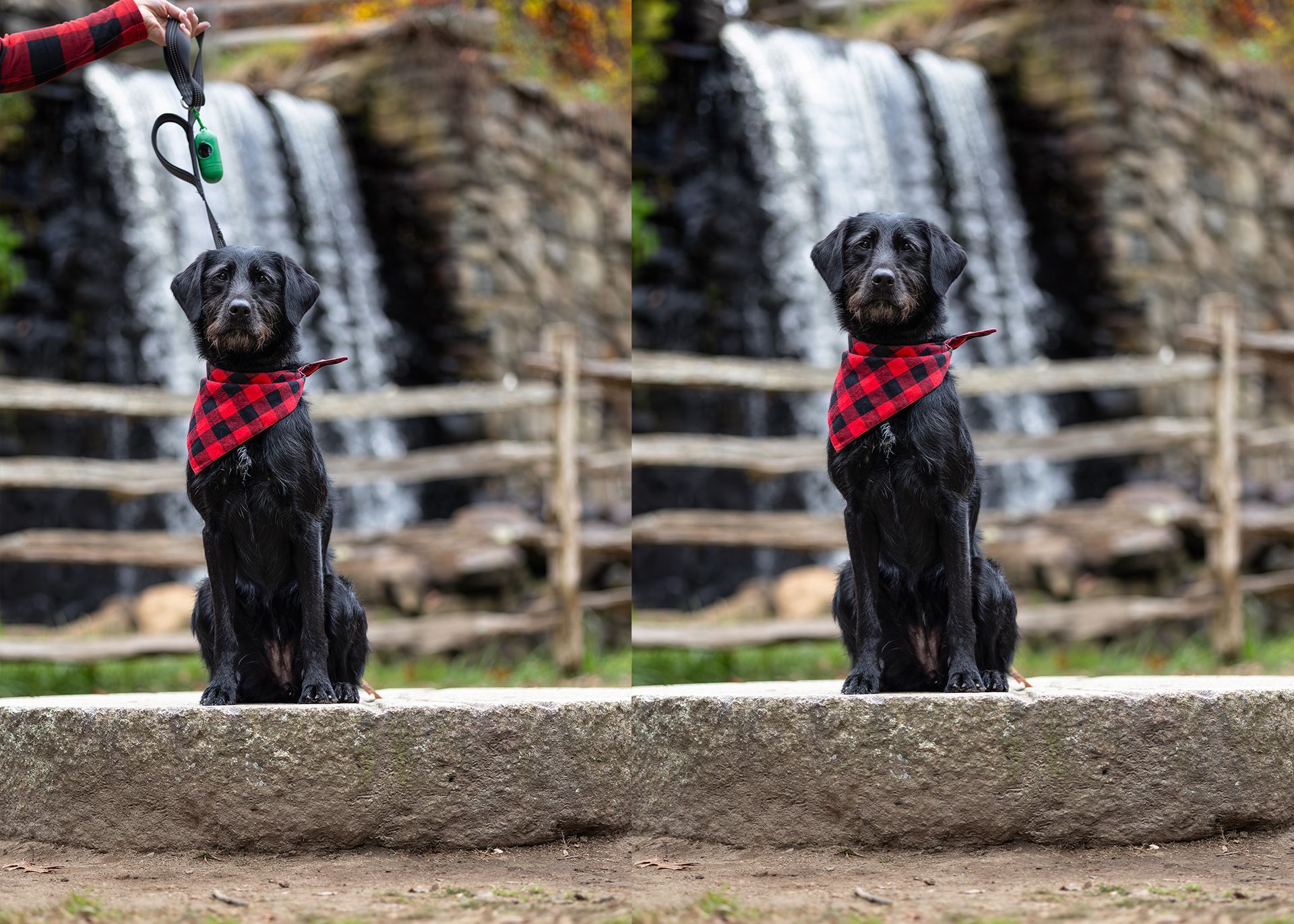
2. The Leash Is Actually One of My Tools
For a dog who doesn't particularly believe in standing still, a leash isn't just a safety device.
It's useful.
It gives us a defined area to work within and gives the person handling the dog enough control to help create those tiny moments I'm looking for.
And sometimes they really are tiny moments.
Your dog doesn't need to sit beautifully in one spot for five minutes while I leisurely photograph them.
They might sit for two seconds.
Look at me for half a second.
Click.
And they're gone.
That's okay.
I don't need five minutes.
I need the right fraction of a second.
Professional dog photography involves anticipating those moments and being ready when they happen.
The finished photograph might make it look like your dog sat there patiently waiting for me.
You and I will know better and we don't have to tell a soul otherwise! 😂
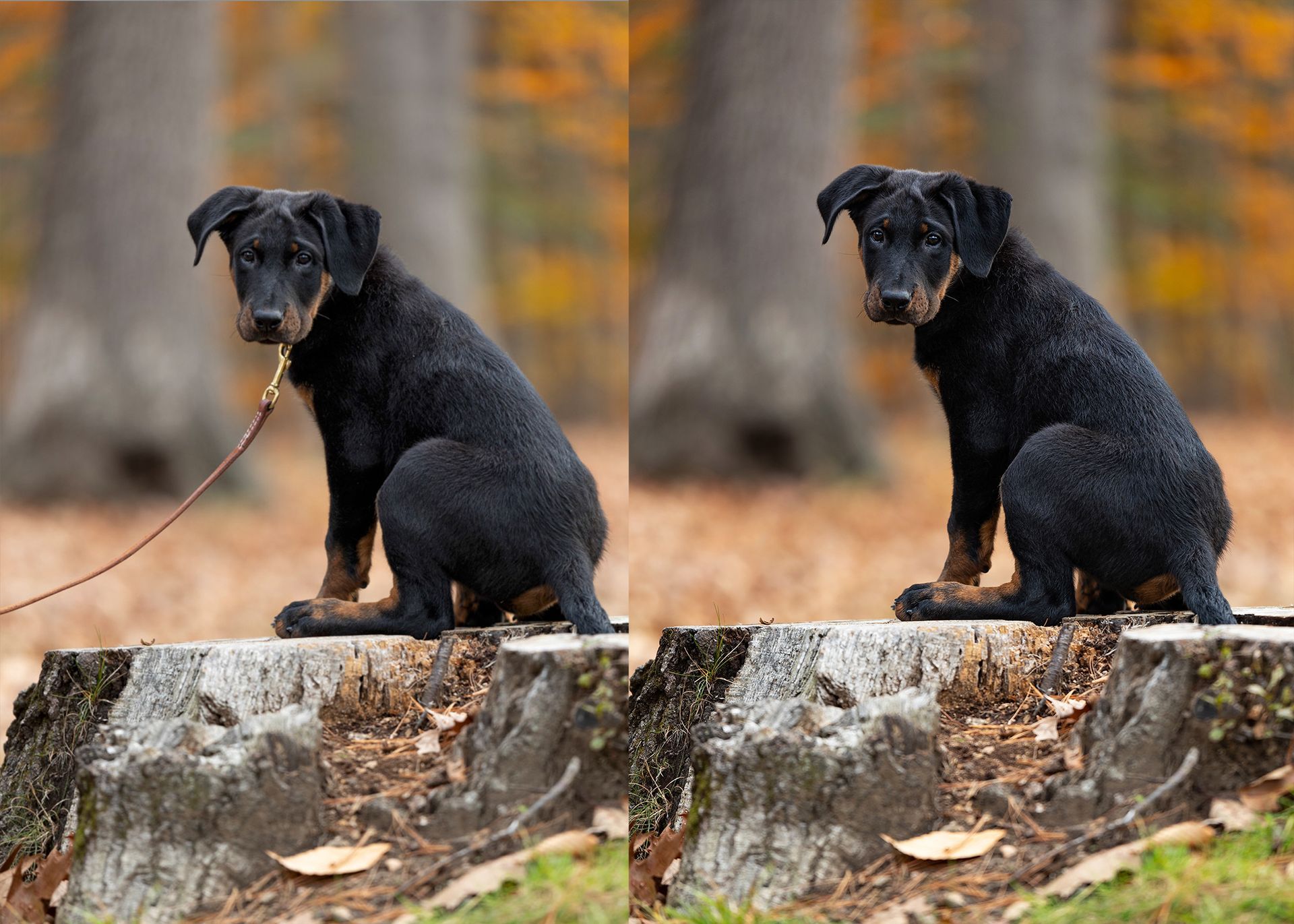
3. Yes, There's a Right Way to Hold the Leash
This is one of those little things clients wouldn't necessarily think about, but it can make a big difference in the finished photograph.
When we're creating a more traditional portrait, I'll often have someone stand behind the dog and hold the leash straight up so that it comes away from the top of the dog's head.
Why?
Because I already know I'm probably going to remove it later.
A leash running straight up and away from the dog usually gives me a much cleaner path to remove it during editing.
A leash running diagonally across the dog's chest, wrapped around a leg or crossing complicated areas of the background can make that process considerably more difficult.
So when you hear me giving oddly specific instructions about where to stand and how to hold a leash, there really is a reason.
At the same time, we're not trying to pull the dog into position or make them uncomfortable.
The leash gives us control and keeps the dog safe.
It shouldn't be the thing creating the pose.
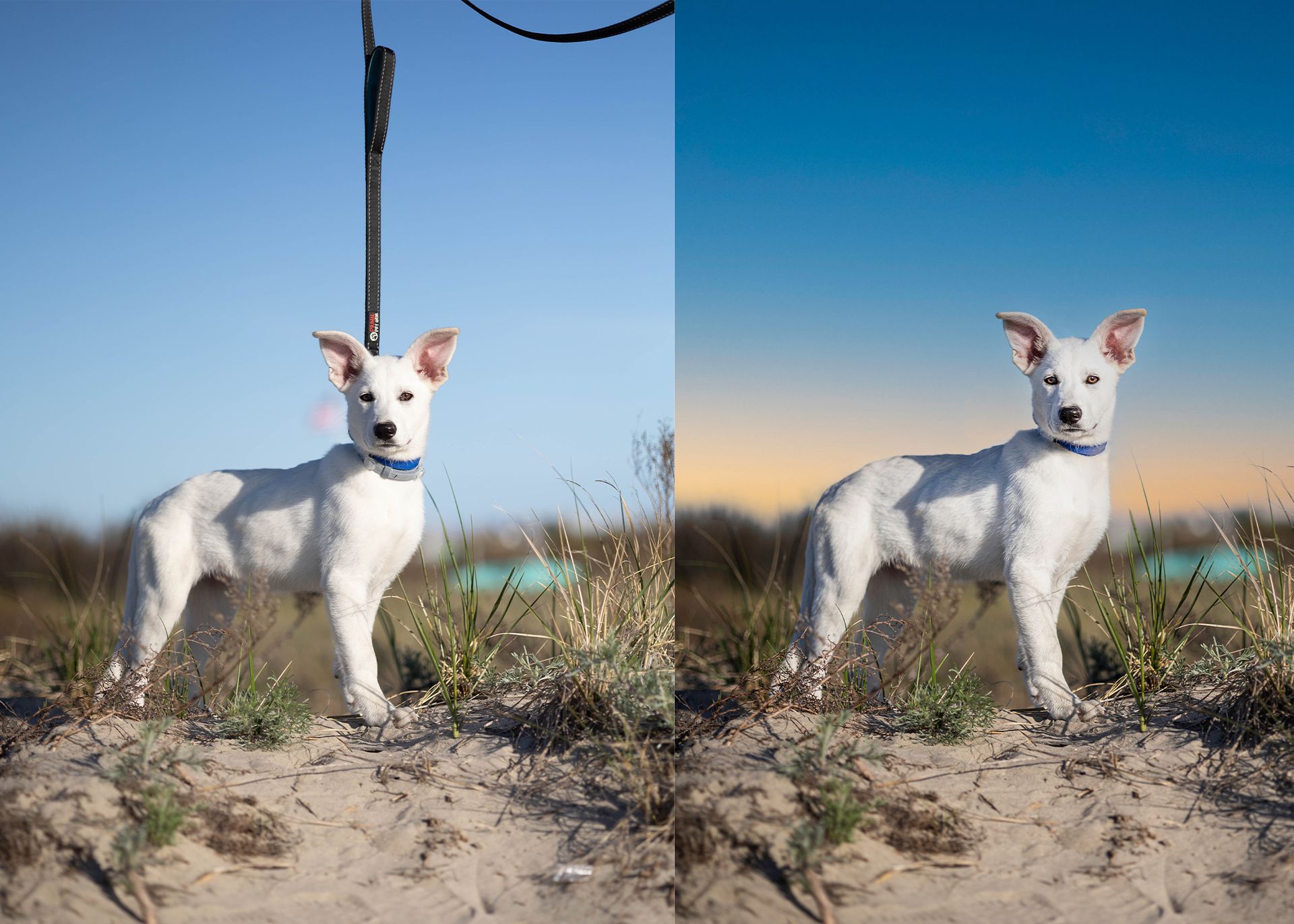
The leash gives us a safe way to create the photograph. Careful positioning makes removing it from the finished portrait much cleaner.
4. What About Action Photographs?
This is another place where people assume the dog must have been off leash.
Not necessarily.
For action photographs, a long line can give the dog considerably more freedom to move while still allowing us to maintain control when needed.
That means we can create photographs of dogs:
- running toward the camera
- chasing a ball
- moving through a field
- exploring
- playing
- running toward their person
without automatically requiring them to be completely off leash.
Depending on what we're creating, the person handling the long line may also end up in the original photograph.
That's okay too.
People and long lines can often be removed during the editing process.
The important part is that we don't have to choose between safety and the photograph.
Safety wins every time.
Then I figure out the photograph.
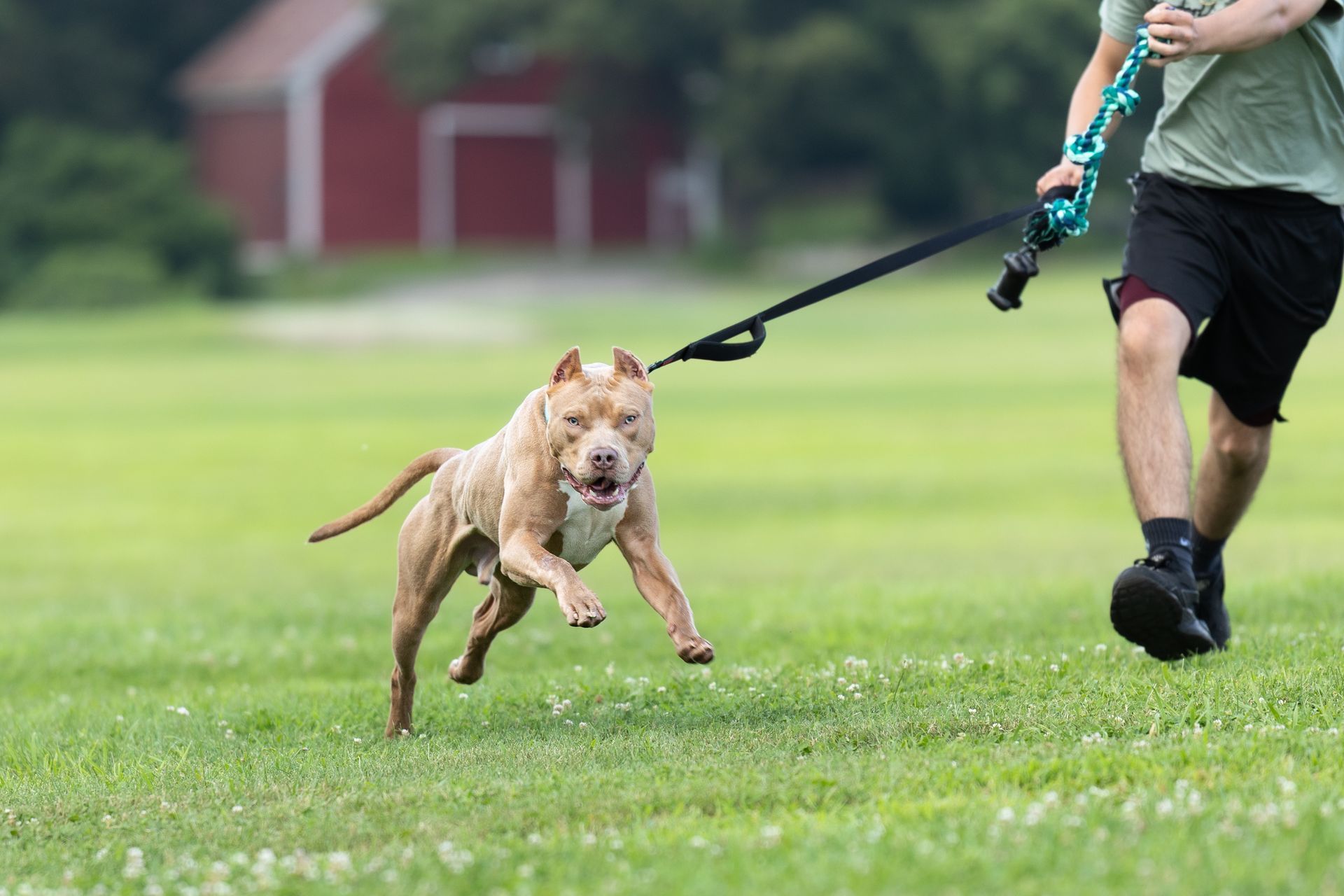
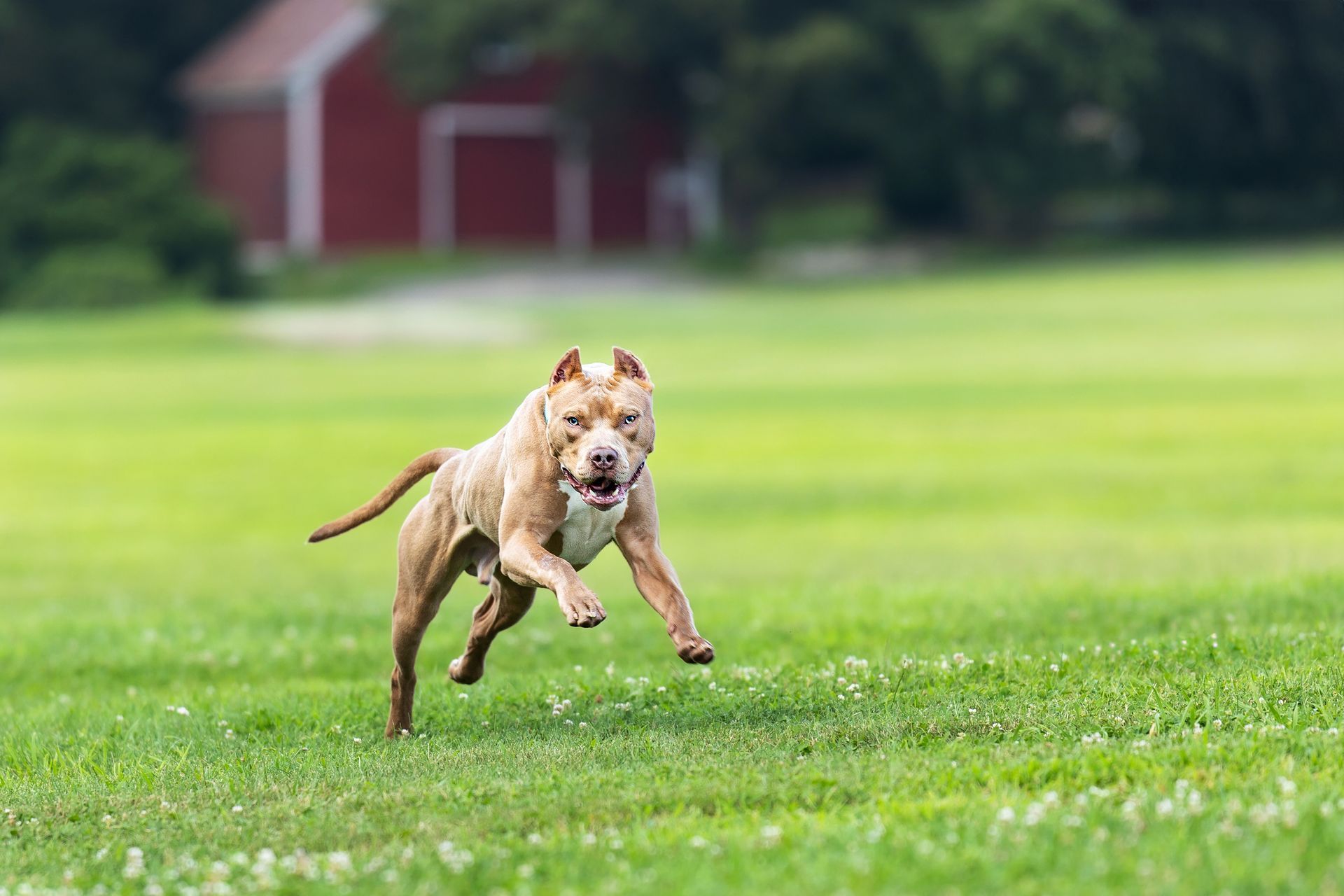
The original photograph doesn't always look like the finished portrait. Long lines can give dogs room to move while keeping the session safe.
5. Sometimes We Stop Trying to Stop the Dog
Let's say your dog arrives at the park and immediately decides:
THIS IS THE GREATEST PLACE I HAVE EVER BEEN IN MY ENTIRE LIFE.
They're sniffing.
They're pulling.
They're looking everywhere except at me.
They've discovered a stick.
There may be a squirrel involved.
Trying to immediately force that dog into a quiet portrait probably isn't going to accomplish much.
So we don't.
Let them explore.
Let them sniff.
Let them get to know the environment.
Let them get to know me.
Maybe we walk for a little while.
Maybe we start with action.
Maybe we play.
And then we come back to the quieter photographs once some of that initial excitement has worn off.
I've talked before about why your dog doesn't need perfect obedience for great photographs, but there's a difference between a dog who doesn't know “stay” and a dog whose personal philosophy appears to be that standing still is a complete waste of valuable time.
Sometimes the best strategy isn't trying harder to stop them.
It's changing what we're doing.
6. The Finished Photograph Doesn't Show What Happened Between Frames
This might be my favorite part of photographing dogs.
Here's what you see:
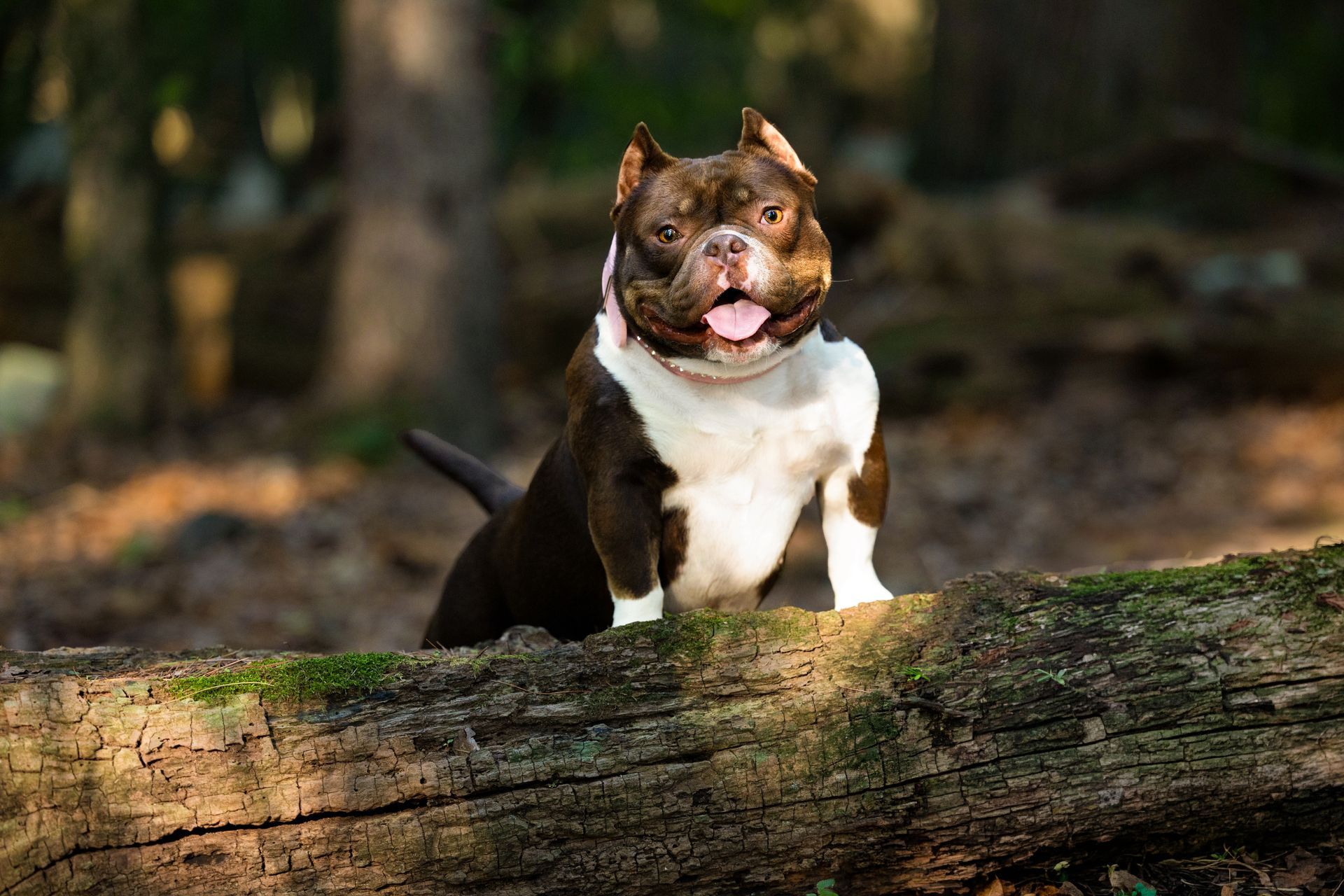
A dog sitting beautifully in gorgeous light, looking directly into the camera.
Here's what might actually have happened:
Sniff.
Look left.
Stand up.
Sit again.
Eat grass.
Look at owner.
Hear squirrel.
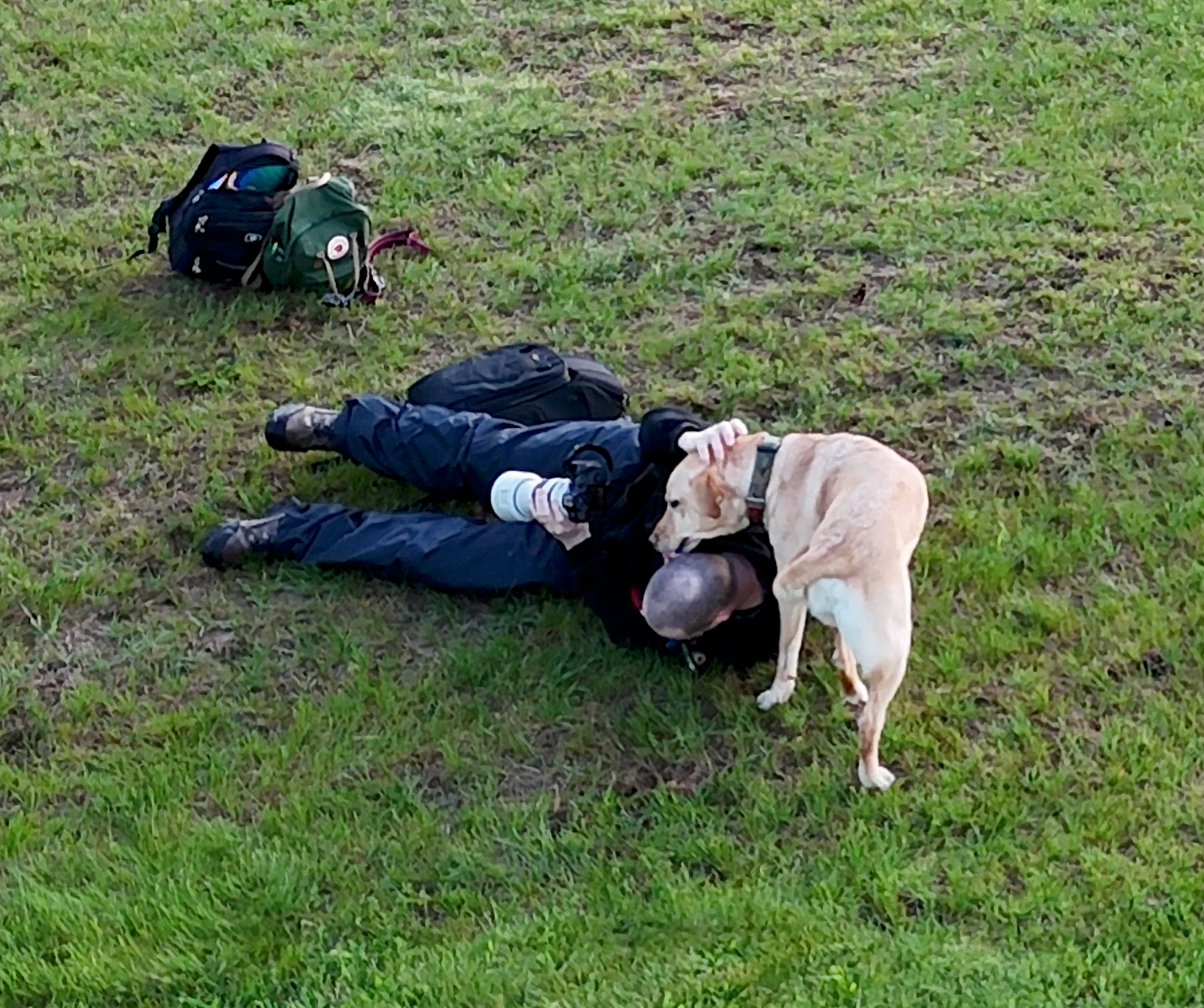
LOOK AT GREG.
Click.
Walk directly toward Greg. 😂
That's dog photography.
The camera doesn't need your dog to be perfect for ten minutes.
It needs me to recognize the moment when everything comes together and capture it.
That involves understanding dog behavior, anticipating movement and having the camera set up to respond quickly when the opportunity appears.
Sometimes the window is several seconds.
Sometimes it's considerably less.
But that's enough.
7. Sometimes the Movement IS the Portrait
There's another possibility.
Maybe I don't actually want your dog to sit still.
If your dog lives for playing ball, I want photographs of them playing ball.
If they run everywhere they go, let's photograph them running.
If they're the type of dog whose ears somehow end up three feet above their head every time they move, I absolutely want that photograph.
The goal of a dog photography session isn't to create the illusion that every dog is calm, perfectly trained and capable of holding a flawless pose.
The goal is to create portraits of your dog.
And sometimes your dog's energy is a huge part of who they are.
Those action photographs, goofy expressions and moments of complete chaos may ultimately tell their story better than a perfectly posed portrait ever could.
That doesn't mean we won't create the quiet portraits too.
We'll work toward both.
But I'm not interested in photographing every dog as though they're the same dog.
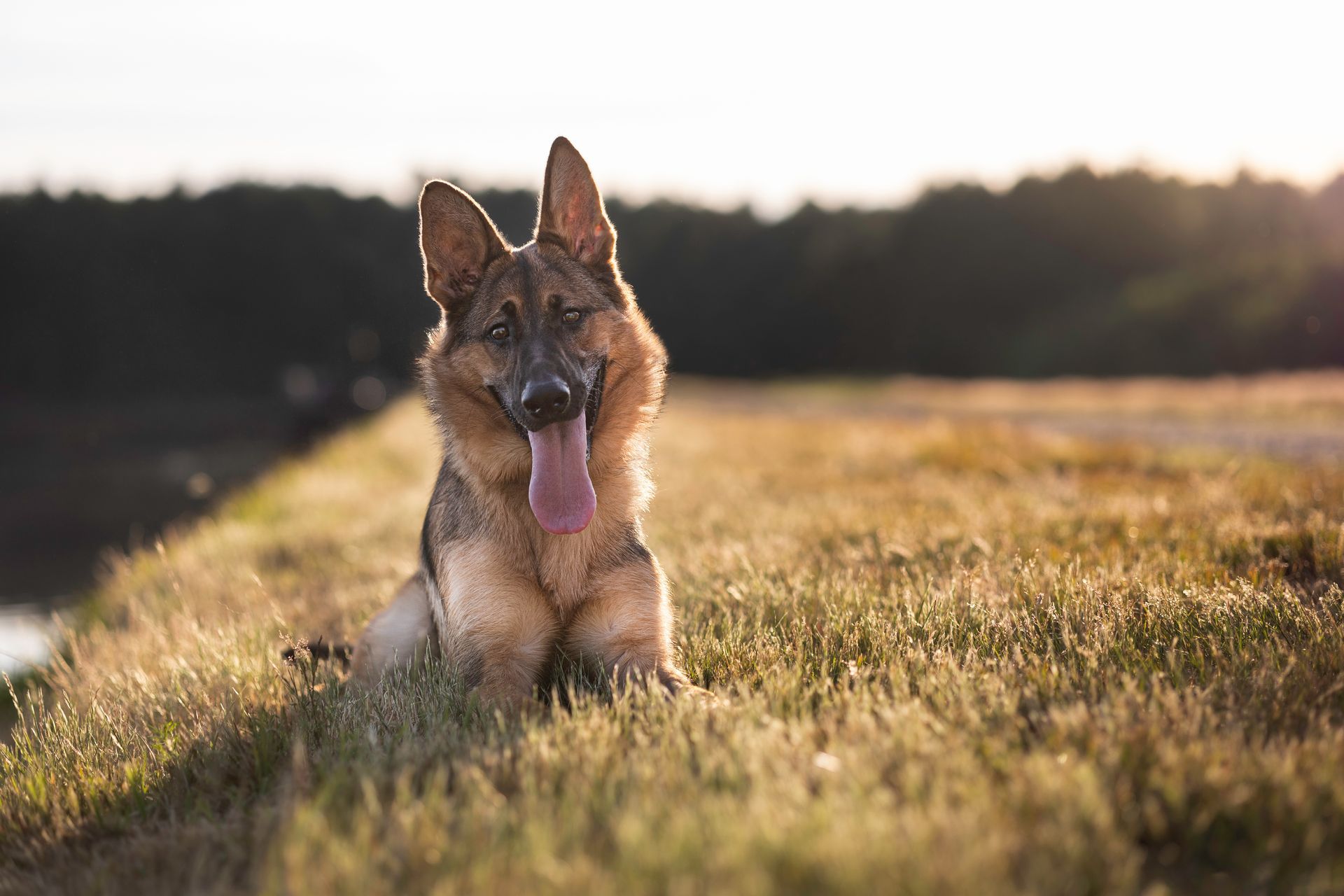
Your Dog Doesn't Have to Fit the Photograph
So if you look through my portfolio and think:
“There's absolutely no way my dog would sit there like that.”
That's okay.
They might not.
They might be on a leash.
They might sit still for less than a second.
They might spend the first part of the session exploring everything except the spot where we'd like them to sit.
They might need a long line for every action photograph.
And the portrait you ultimately hang on your wall may show none of that.
Or, even better, it might show exactly how wonderfully crazy they really are.
Your dog doesn't need to fit the photograph.
My job is to figure out how to create the photograph around your dog.
List of Services
-
Why Your Dog Doesn't Need Perfect Obedience for Great PhotographsList Item 1
Your dog doesn't need perfect manners or a flawless stay. See why great portraits are possible with regular, imperfect dogs.
-
How to Choose the Right Dog PhotographerList Item 2
From safety and experience with dogs to style and pricing, here are seven things to consider before choosing a photographer.
-
How Long Does a Dog Photography Session Take?List Item 3
Every dog works at their own pace. Learn how personality, energy and session type determine how long we'll photograph.